

Logan Donnelly works out what it actually costs to parent in New Zealand in 2025
Becoming a parent profoundly changes your relationship with money. One moment, you're spending $7 on flat whites without blinking; the next, you're scrutinising every expense, from nappies to formula. On top of the financial shift, the emotional and mental toll of sleepless nights can make navigating finances even more intimidating.
And now, just to spice things up, our Government has shifted the goalposts. From April 1st 2026, the Best Start payment ($73-a-week tax credit most new parents have been entitled to) will no longer be universal for a baby’s first year. Meaning many new parents could be thousands of dollars better or worse off, depending on their household income. Whether you're expecting or already knee-deep in nappy changes, this guide will help you plan, save, and stay sane while raising a little one in Aotearoa.
STEP 1. GRAB THE HELP YOU'RE ENTITLED TO
Too many parents miss out on support because they didn’t know it existed. Either they thought they earned too much, or didn’t have the mental energy to wade through the forms. Applying for a tax credit is hard when you’re running on broken sleep and coffee fumes!
But getting a grip on what you’re entitled to can make a real difference to your financial stress. Here’s a breakdown of the key payments, how they work and what to do.
Paid Parental Leave (PPL)
This is the Government-funded leave for eligible working parents. It’s up to 26 weeks, the total amount depends on your income before starting it.
+ To qualify, you (or your partner) must have worked at least 10 hours a week for 26 of the past 52 weeks before your due date.
+ The weekly amount is based on your average earnings, capped at $788.66 a week before tax
+ There’s also a minimum payment, so even part-time workers should qualify
+ PPL can be shared between parents, but only one parent can be on it at a time. In most families, mum uses the full 26 weeks, but it’s good to know the flexibility exists
+ You can work up to 64 'Keeping in Touch' hours during PPL (but not in the first 28 days). It’s handy for easing back in or staying connected to work. Track your hours carefully! Many mums have been hit with IRD penalties, including having to repay their entire parental leave, for accidentally exceeding the limit
+ Bonus leave for dads or partners: You're also entitled to two weeks of unpaid leave when your baby is born. It's reccomended you give your employer at least 60 days’ notice and provide the due date in writing.
Heads-up: the application can take some time to process, especially if your employer is slow to return the required paperwork. You’ll need their signature, so get on it early. It’s one less thing to deal with once the baby arrives.
How to apply for PPL
Apply for PPL through Inland Revenue (IRD), and don’t leave it too late. Having that approval locked in ahead of time makes a big difference when you’re in the thick of newborn life.
Best Start Tax Credit
This one’s a biggie. It’s worth around $3,800 a year, and while it used to be guaranteed for the first year, that’s about to change.
+ For babies born before 1 April 2026: you’ll get $73 a week for the first year, no income test. The payment kicks in once your Paid Parental Leave (PPL) finishes, or from birth if you’re not taking PPL. After their first birthday, the payment becomes income-tested for years two and three.
+ For babies born on or after 1 April 2026: the payment is income-tested from day one. Same $73 a week, but you’ll only get it if your household income falls below that $79,000-$97,000 window. Above that, you’ll get either less or nothing at all. You can apply through SmartStart when registering your baby’s birth or via Inland Revenue (IRD). Remember that you can’t receive Best Start at the same time as PPL, which is why it starts after PPL ends.
Working for Families (WFF)
This is a bundle of payments for families with kids under 18. It’s income-tested, but many families qualify.
+ Family Tax Credit (FTC): paid weekly per child. As of 2025, it’s around $144.30 for your eldest child and $117.56 for each additional child. Payments start reducing once your income hits about $42,700 (rising to $44,900 from 1 April 2026).
+ In-Work Tax Credit (IWTC): around $97.50 per week for up to three kids. Available to families working a minimum number of hours (20+ for sole parents or 30+ combined for couples) and not on a main benefit.
+ Minimum Family Tax Credit (MFTC): this one’s a bit niche. It guarantees a minimum income for working families, aiming to top you up to about $679 net per week.
How to apply for WWF
Apply for Working for Families through myIR or via SmartStart when registering your baby’s birth. Just make sure your income and family details stay up to date; underpayments and overpayments can get messy fast.
Childcare subsidies and early childhood education support
Childcare’s pricey in Aotearoa, but there’s a mix of subsidies and rebates that can ease the load:
+ Childcare Subsidy (WINZ): income-tested help for under-5s.
Up to $6.52/hour for 50 hours/week, depending on income. Even non-working parents may get up to 9 hours.
+ 20 Hours ECE: all 3, 4, and 5-year-olds get 20 free hours a week with a licensed provider. It’s automatic and not income-tested.
+ FamilyBoost Rebate (new in 2024): for families earning under $180k and not on a main benefit. Covers 25% of childcare fees (up to $75/week), paid quarterly via IRD. Just upload your invoices.
+ OSCAR Subsidy: Helps with before/after-school or holiday care for kids aged 5-13. Income-tested, but worth checking if you’re juggling school hours with work.
Other government help
These extras won’t apply to everyone, but they’re worth knowing about....
+ Accommodation supplement: helps cover rent or mortgage payments if your income is low and your housing costs are high
+ Jobseeker support/sole parent support: if your income drops suddenly, or you're parenting on your own, check if you're eligible for Jobseeker or Sole Parent Support.
+ Child disability allowance: if your child has a long-term condition requiring frequent care
+ Support for student parents: if you’re studying, grants or payments may be available
All of this support is subject to change, so it’s worth checking Work and Income and IRD regularly, especially if your situation shifts.
STEP 2. WHAT'S THIS BABY GOING TO COST?
Big ticket items
Let’s rip the band-aid off. Raising a baby involves both one-off setup costs and ongoing expenses. Think nursery furniture (cot, change table), a car seat and a stroller/pram: those are the big-ticket items. A fancy new stroller might set you back over a grand, a new car seat can be $300 to $600.
Daily essentials
Then there are the daily necessities: nappies (8-12 a day at first, costing around $80-$90 a month for disposables plus wipes). If you're formula feeding, that could be $1,500-$2,000+ a year. And don't forget clothes they outgrow in a blink, bedding, and all those other bits and bobs. Childcare is often the biggest beast, potentially $200 to $400 a week per child if both parents are working.
The $15k reality
You’ll hear all sorts of estimates, but most New Zealand families will spend somewhere around $15,000 in the first year.
But here's the good news: most of that cost is flexible. Where one parent drops $1,200 on a top-end pram with suspension and Bluetooth, another finds a second-hand one for $120. They both get the same walk around the block.
STEP 3. THE SMARTEST WAYS TO SAVE MONEY WITH A BABY
Second-hand is your new best friend
I know preloved can feel like a downgrade, but when it comes to baby gear? It’s a goldmine! Babies grow like weeds and outgrow things faster than you can click 'Buy Now'. Trade Me, Facebook Marketplace, and Plunket Sales are full of barely-used treasures from parents who overbought or just finished their last round of babyhood. Hand-me-downs from mates and family are even better, they’re free! Most of our baby gear was pre-loved and worked just fine.
But be cautious with safety gear. For car seats, make sure they meet current NZ safety standards, haven’t been in an accident and aren’t past their expiry date. If you’re buying second-hand, only do so from someone you know and trust, or consider renting a baby capsule for those early months.
For mattresses, a new one is often recommended to reduce the risk of SIDS. If you’re using a second-hand cot, replacing the mattress is a simple step that adds an extra layer of safety.
Stick to the essentials
Look, I fell for it too. Bought the musical mobile, the bottle warmer, even a nappy bin that promised to seal in odours. Most of it now lives in a storage box marked 'Rookie Purchases'. Just kidding, I sold it all on Facebook Marketplace! Your baby won’t care if their outfit is from Kmart or an organic boutique in Ponsonby. Focus on what matters: somewhere safe to sleep, a way to feed them, a safe ride in the car, nappies and clothes that fit.
If it sings, flashes, rocks, vibrates or has Bluetooth... your baby probably doesn’t need it.
Make the most of baby showers
If someone offers to throw you a baby shower, say yes and make a list. Be intentional. Create a gift registry. Ask for things you’ll actually use. Think nappies, wipes, vouchers or gear that’s built to last. People love to give, so hold off on big shopping sprees until after.
Breastfeed if it works for you
So it’s not entirely free – there are pumps, bras, and lactation cookies to name just a few of the costs, but it’s still much cheaper than formula. A full year of formula feeding can cost up to $2000. Lactation support is often free, too.
But if breastfeeding isn’t an option for you, or just doesn’t work out, factor formula costs into your budget early and do what’s right for your whānau.
Make baby food yourself
Once your baby starts solids, you’ll be tempted by those colourful $2.50 pouches. But you don’t need them. A pumpkin, a $10 stick blender and an ice cube tray can feed your baby for a week. Plus, you know exactly what’s in it. Mash or blend, freeze, repeat.
Try cloth nappies (even just a few days a week)
Cloth nappies have come a long way! Using them can slash your disposables bill, even if you only use them part-time. Yes, there's more washing, but the savings are worth it. We use disposables at night and cloth during the day. It’s saved us a few hundred!
Buy in bulk (but not too much)
Stock up on non-perishables like nappies when they're on sale. Just don’t overdo it on newborn sizes. They grow fast. Like, weirdly fast.
STEP 4. BUDGET LIKE YOU'VE BEEN HERE BEFORE
Forget the perfect pie charts and finance guru advice that assumes you’ve got stacks of leftover cash each month. Most new parents are just trying to stay afloat, not deciding whether to invest in crypto or a second bach.
The key is this: you don’t need to do everything at once, but you do need visibility. Figure out what’s coming in, what’s going out and where the pressure points are. You can’t fix what you can’t see.
Start simple. Write down your essentials: rent or mortgage, groceries, power, transport and now... baby stuff. Add it all up. If the numbers are tight and they likely will be, that’s not a failure. That’s a sign to get creative, cut back where you can, and maybe ask for help before things snowball.
Rather than chasing a fixed percentage, try this instead:
+ Prioritise needs first. This includes nappies, housing, food and essential baby gear.
+ Be brutally honest about the 'nice to haves'. A takeaway here and there is fine, but this isn’t the season for big-ticket splurges.
+ Aim to save a little, not a lot. Even $10 a week into a rainy-day fund matters. Think of it as future-you insurance.
If you’re switching to one income, try a 'dry run' before baby arrives. Live off the reduced budget and put the extra into savings. It’ll build a buffer and show you what actually works before you’re running on coffee and chaos.
Automatic transfers are the trick for us, if it’s out of sight, it’s out of our spending reach.
STEP 5. TAP INTO THE KIWI PARENT PERKS
We’ve got a few uniquely Aotearoa tools and services that can help lighten the load.
+ Get your finances sorted (literally!): sorted.org.nz is a free government service with amazing budgeting tools, calculators and guides specifically for families. The MoneyTalks Helpline offers free financial advice and can connect you with local budgeting services. moneyhub.co.nz has great guides on saving, banking and 'baby on a budget' tips.
+ Power up your savings: use comparison sites like PowerSwitch (from Consumer NZ), Glimp or switchme.co.nz to find cheaper electricity, gas and internet plans. You could save hundreds of dollars a year. Adopt smart energy habits: turn off unused appliances and use any 'free power hours' your provider offers.
+ Master the second-hand scene: Trade Me is your go-to for almost anything baby-related. Facebook Marketplace and local groups are awesome for local finds and even 'pay nothing' freebies.
+ Community and toy libraries: look for Plunket sales or school fairs. Toy libraries let you borrow toys and equipment for a small fee, saving you heaps on stuff they'll quickly get bored with.
+ Community services card: if you're on a lower income, apply for this to get cheaper doctor visits and prescriptions for adults (kids under 14 are already free for GP visits and immunisations).
+ Your bank's tools: many banks have apps with spending trackers and goal-setting features. Some even let you create sub-accounts for specific things like baby expenses.
+ Local support: Citizens Advice Bureau (CAB) and Plunket can guide you to available support.
+ Retail perks: sign up for supermarket baby clubs (Countdown, New World, Pak'nSave) for coupons. Use pharmacy and baby store loyalty programs.
PLAN SMART, PARENT HARD, AND BACK YOURSELF
Phew. That’s a lot to take in. But here’s the bottom line: raising a baby on a budget in New Zealand isn’t easy, but it’s definitely doable.
The support is there. Use it. Grab every subsidy, credit and rebate you can. Say yes to hand-me-downs. Set up that emergency fund, even if it starts with just a tenner. Talk to other parents.
Lean on your community.
Yes, there’ll be curveballs. Unexpected costs. The odd financial wobble. But with some planning, a bit of hustle and a solid sense of what matters most, you can handle it. You already are.
Your kid won’t care how much you spent on their pram. What they’ll remember is how it felt to be loved, supported and safe.
Just do your best. You've got this, and if in doubt, reach out.
Logan Donnelly is the heart behind KiwiDad, passionately advocating for young families facing the challenges of parenting in the 21st century. A qualified teacher and educator, Logan lives in Ōmokoroa with his wife Charlee, daughter Delilah and son Roman.

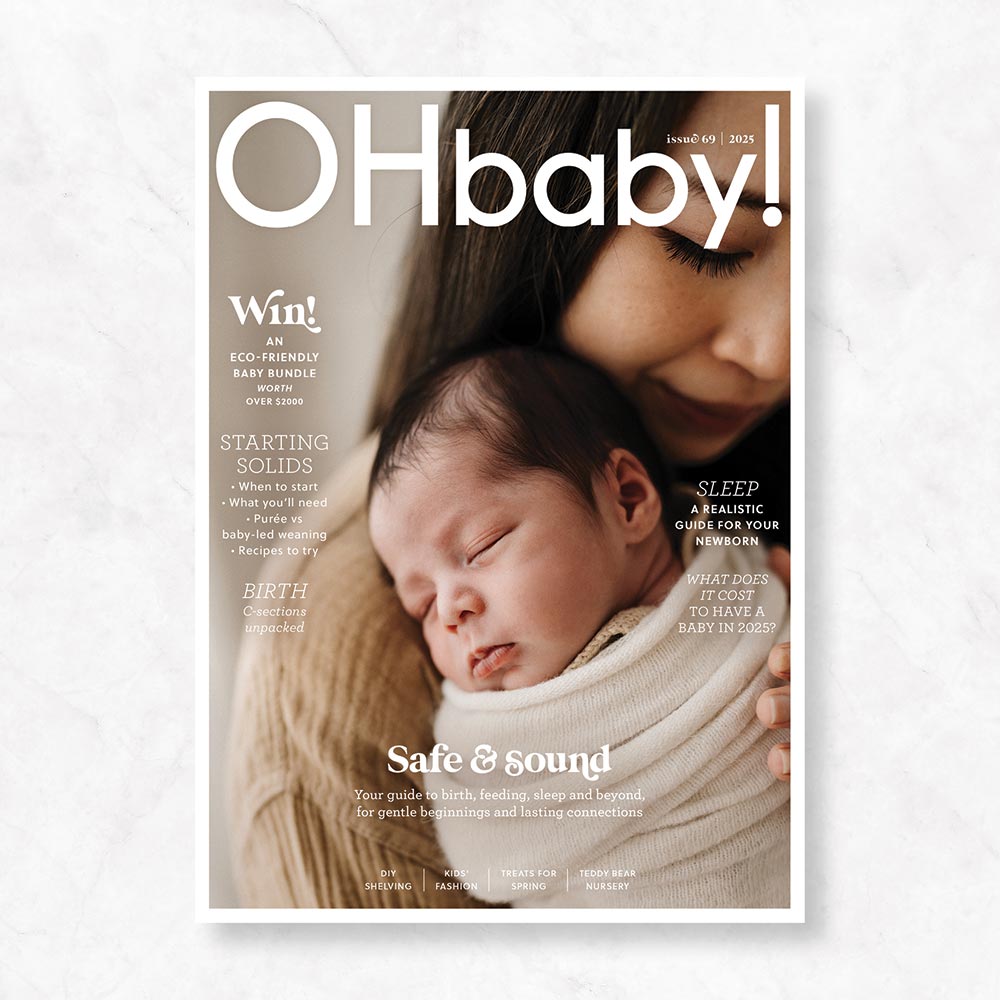
AS FEATURED IN ISSUE 69 OF OHbaby! MAGAZINE. CHECK OUT OTHER ARTICLES IN THIS ISSUE BELOW
Cookie Policy | Terms & Conditions | Privacy policy | Copyright © 2026 www.ohbaby.co.nz. All Rights reserved.