
The invisible things you'll bring into parenthood

We spend months preparing for the arrival of a baby. We research prams and baby monitors. We learn about labour, feeding, sleep and what to pack for the hospital. We think about the birth we would like, what support we might need and how our lives are about to change.
We prepare the nursery. We prepare our homes. We prepare our bodies. What almost nobody prepares us for is the arrival of ourselves as parents.
Having a child does not simply add a baby to your existing life. It changes your identity, relationships, priorities and often your understanding of your own childhood. It can bring extraordinary love. It can also bring fear, rage, grief, anxiety, resentment and an intensity you may never have experienced before. And sometimes the person who emerges does not look anything like the parent you imagined you were going to be.
The parent we plan to be
Long before our children arrive, many of us have already made decisions about parenting.
I’ll be patient. I’ll listen. I won’t shout the way my parents did. I’ll make sure they can talk to me. I’ll let them express their feelings. I’ll let them be who they are. I’ll do things differently.
Those intentions matter. But they are not the only thing we bring into parenthood. We also bring every experience we have had of being parented.
We bring up what happened when we cried or became angry, how mistakes were handled, whether disagreement was safe, whether adults apologised and whether approval depended on behaving, achieving or being “good.” We bring what we learned about control, conflict, needs, boundaries and what it means to be a “good” mother or father. We bring what we consciously remember and what became so normalised we may never have questioned it.
This is part of what makes the transition into parenthood so much bigger than simply having a baby. We do not enter it as blank slates. We enter carrying a history.
What your baby reveals
Before parenthood, many of our coping strategies can work very well. If we are overwhelmed, we can leave. We can avoid conflict, organise harder, work more, distract ourselves, have a glass of wine (or three), withdraw, people-please or push through.
Then a baby arrives. A tiny, utterly dependent human who does not care about your schedule, coping mechanisms or how much sleep you had last night. They cry when you have no idea why. They need you when you have absolutely nothing left to give. They don’t care how rational your argument is or that you can run a team almost blindfolded at the office. They cannot organise themselves around your need for certainty or predictability.
Your child does not create your patterns. They reveal them.
And suddenly, strategies that once helped you feel safe or in control may stop working. You may discover that crying sends your whole body into panic. That feeling powerless makes you angry. That asking for help feels weak. That somebody doing things differently makes you want to take over. That not knowing what your baby needs feels like failure.
You may become controlling, anxious, resentful, hypervigilant or shut down. You may push yourself beyond exhaustion because you believe that’s what a good mother does.
Then, so often, comes shame. Why am I like this? I know better. I should be doing better. But shame rarely helps us understand what is happening.
Curiosity does. What is this moment bringing up in me? What am I feeling underneath the reaction? What am I making this mean about me? About my baby? That is where something begins to change.
Knowing vs doing
Parents today have access to more parenting information than ever before. We can learn about attachment, child development, emotional regulation and boundaries before our babies are even born. That knowledge can help. But knowledge alone does not give us capacity.
You may know your baby is not manipulating you and still feel completely overwhelmed by their crying. You may understand that a toddler’s meltdown is developmentally normal and still feel rage rising in your body.
We assume that if we know better, we should automatically be able to do better. But awareness is not the same as capacity. Our reactions are influenced by our nervous-system state, sleep, stress, support, physical recovery, past experiences and the meaning we attach to what is happening.
A parent with no capacity left may behave in ways that do not reflect who they want to be. That does not remove responsibility. It changes what useful responsibility looks like.
Shame says, “I am a terrible parent.” Responsibility says, “Something is driving this reaction, and I am willing to understand it.” We do not need parents drowning in shame. We need parents able to see what happened clearly enough to make a different choice next time.
The opposite isn’t always freedom
Many of us enter parenthood determined not to repeat what happened to us. But doing the opposite is not necessarily the same as being free from the pattern.
If you were raised in a highly controlling home, you may decide your child will never feel controlled, then struggle to hold boundaries because saying no feels too much like becoming your parent.
If your emotions were dismissed, you may become determined that your child will always feel heard, then begin taking on their emotions as your own and struggle to let them experience distress without needing to rescue them.
If you grew up in chaos, you may become intensely committed to order, making normal childhood noise and unpredictability almost unbearable.
If your parents rarely praised or reassured you, you may swing to the opposite extreme — constantly praising or over-celebrating your child, making it harder for them to develop validation from within.
These responses make sense. But they can still be organised around the past. Sometimes we repeat a pattern. Sometimes we react against it. Either way, the past is still in the driver’s seat.
Understanding inherited patterns is not about blaming our parents. They were shaped too: by family, culture, circumstances and survival strategies. It is about creating choice. Because what remains invisible tends to repeat itself. What becomes visible can begin to change.
Seeing your childhood differently
Holding your baby can awaken feelings you did not expect. You may suddenly understand how relentless caring for a child can be and feel enormous compassion for your parents.
You may also feel grief. Or anger. You may look at your tiny baby and wonder how anybody could have treated someone so small the way you were treated. You may find yourself thinking, “I will never make my child feel the way I felt.” And at the same time, you may find yourself behaving in exactly the way you swore you never would.
We can understand our parents more deeply and still acknowledge the impact of what happened. We can love them and choose differently. Becoming a parent can be the beginning of a much deeper understanding of being parented.
Autopilot parenting
One of the most disorienting things about becoming a parent is how suddenly all of this can happen. I call it autopilot parenting.
Before your baby arrives, you know yourself as one person. Then this tiny human enters your life and it can feel as though a switch has been flicked. Old fears, beliefs and survival responses that may have lain dormant for years are suddenly activated. You may become more anxious, controlling, reactive or desperate to get things right.
Your partner will change too. Because the arrival of a baby creates such a clear before and after, the person standing in front of you can suddenly feel completely different. In some ways, they are. Parenthood has activated parts of both of you that life before children may never have forced you to confront.
Most parents don’t see this coming. We expect sleep deprivation, nappies and interrupted routines. We rarely expect to encounter parts of ourselves, and parts of our partner, that have never surfaced before.
Two histories, one relationship
A baby does not only transform individuals. They change the relationship between the adults caring for them. Even strong relationships can be stretched by sleep deprivation, physical recovery, changing roles, reduced intimacy and relentless responsibility.
Two histories enter the room. Two models of conflict. Two sets of beliefs about family. Two different relationships with emotions, responsibility and asking for help.
One person may become controlling when overwhelmed. The other may withdraw. One may believe, “If you loved me, you would notice what needs doing without me having to ask.” The other may genuinely believe they are contributing in exactly the way they were taught a good partner should. Underneath arguments about dishes, feeding, visitors or whose turn it is to get up are often beliefs formed decades earlier.
You don’t need to heal everything first
There is a risk that conversations about inherited patterns become one more impossible standard. Another thing to perfect before having a baby. That is not the point.
You will be activated. You will make mistakes. You may shout, react from fear or behave in ways you regret. The goal is not to become a parent who never messes it up. The goal is to notice, take responsibility, repair and keep learning.
A fuller repair might sound like:
“I yelled, and that was scary. I’m sorry. I want you to feel safe with me. I’m working on how I respond when I’m overwhelmed. Next time I’m going to pause and start again. How was that for you? Would you like a hug, or would you like some space?”
Repair is more than saying sorry. It acknowledges impact, takes ownership without excuses, names what you want to do differently and makes space for your child’s experience.
It teaches children that relationships can survive mistakes, adults are responsible for their behaviour, and children do not have to carry the emotional weight of what adults have done. That is responsibility without shame.
Add yourself to the checklist
Learn how to use the car seat. Talk about feeding. Prepare for the birth. Think about practical support.
Then add another kind of preparation. Get curious about yourself and your partner. How were you parented? What happened when you made mistakes? Were your feelings welcomed? How were boundaries held? Were you responsible for other people’s feelings? What happens when you feel powerless? What are you most determined not to repeat? Could trying desperately not to repeat it take you to the opposite extreme?
And now that you understand more about where you have come from, what kind of parent do you want to become? There are no perfect answers. The value is in asking the questions. Because parenthood will reveal things.
It will show you where you are resourced and depleted. It will invite you to ask for help, hold boundaries, tolerate discomfort, make mistakes, repair and try again.
We spend so much time preparing for the child who is about to be born. Perhaps one of the most important things we can do is prepare for the parent who is being born too. Not by trying to become perfect. But by understanding where we are coming from, recognising what we carry and building the capacity to choose what we create next.
That is where generational change begins. Not with perfect parenting. With awareness, responsibility, repair and the willingness to do something different.
Five questions to ask first
Alongside birth plans, feeding and sleep, spend some time exploring the invisible things you are bringing into parenthood.
- What happened in my family when I was upset? Were emotions welcomed, fixed, ignored, criticised or punished?
- What happened when I made mistakes? Did mistakes mean learning, or shame, disappointment or withdrawal of approval?
- What happens to me when I feel out of control? Do I become angry, anxious, controlling, withdrawn or desperate to fix things?
- How easy is it for me to ask for and receive help? Notice whether needing other people brings up discomfort for you.
- What am I most determined to do differently from my parents? Could I become so focused on doing the opposite that I create a different version of the same problem?
You do not need perfect answers. You are simply making the invisible more visible before the intensity of parenthood begins.
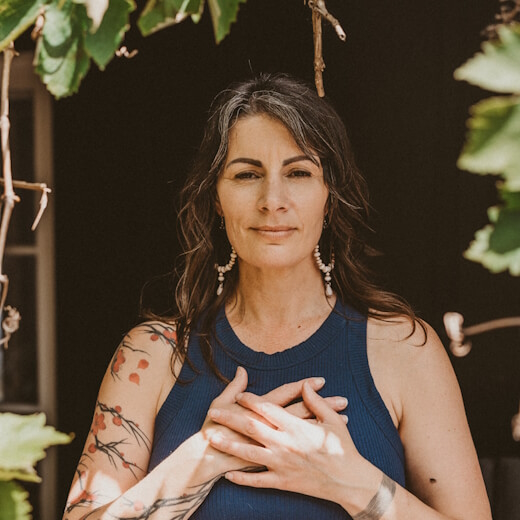
Jacqlin Richards is a Parenting Alchemist, mother of two, and founder of the Resourced Parenting Method™. A 2025 Women Changing the World Gold Award recipient, her #1 Amazon Best Selling book, F*ck Up Your Kids with Grace & Humour: The Truth About Parenting, is available at jacqlinrichards.com.
 View the book