

Thinking about starting your baby on solids? Rebecca Wilson from What Mummy Makes walks us through the first steps.
I began writing weaning and family feeding cookbooks when my daughter, Nina, was just one. She is now seven and a fantastic eater (although, she has her moments like all kiddos do). I still remember how daunting and sometimes lonely it felt at the beginning. I had so many questions, felt so naive and I didn’t have time to read hundreds of pages of theory or keep up with all the many different sources offering the latest guidance.
I started Nina’s weaning journey when she was a baby by offering a combination of purées and finger foods. I focused on sharing meals with her, giving her a puréed version of whatever I was eating, alongside small strips of the same food for her to explore different textures. After about a month, Nina began refusing the spoon, so we transitioned to a full baby-led-weaning approach.
I grew up in a household where we sat and ate together as a family, so I wanted to instil in my daughter this practice from the beginning of her feeding journey. It’s important to remember that this is just my experience with Nina and your weaning journey may look completely different – and that’s perfectly okay!
Every baby is unique and they all approach eating in their own way.
There are so many benefits to eating with your children – it reduces fussy tendencies, teaches your child the process of eating, models healthy-eating habits, encourages positive-eating behaviours, establishes a healthy routine around food and mealtimes, inspires healthy nutritional choices and, not to mention, mealtimes shared are a fantastic source of quality time with your family.
Introducing your baby to solid foods is typically recommended around six months, once they show clear signs of readiness:
+ Your baby should be able to sit upright and maintain good head control
+ They should be able to sit independently without leaning on you or other objects
+ Your baby should be able to coordinate their eyes, hands and mouth, allowing them to look at food, pick it up and bring it to their mouth.
+ Your baby should be able to swallow food rather than spit it out. Their tongue-thrust reflex needs to have reduced – if they spit out the food initially, wait a few days and try again.
It’s important to note that some behaviours are often seen as signs of readiness when, in fact, they should not be your sole reason for weaning baby early unless specifically advised to do so by your health professional. Such signs include:
+ Waking more frequently during the night or not yet sleeping through
+ Chewing on fists, which is typically related to teething or is a developmental habit
+ Requesting more milk feeds – do offer extra milk, though, if you think your baby needs it
While you don’t need much when starting to wean your baby, there are a few essential items to make the process easier and safer:
+ Highchair with safety harness – a sturdy highchair with a safety harness is a must. Never leave your baby unattended while eating. If the highchair has shoulder straps, ensure they’re not too tight, as this can restrict your baby from leaning forward if they gag or choke on food. It’s important that they can move to dislodge the food themselves. Remember it is always safest to give baby food when they are sitting independently rather than on your lap, as this way they can lean forward of their own accord and control their body.
+ Small cup (open or valve-free sippy cup). Introduce your baby to drinking from an open cup or a valve-free sippy cup as early as possible. While babies don’t necessarily need extra hydration until they reach around 10–12 months (as breast milk or formula generally provides all the hydration they need before then), this is a good way to practice and build their drinking skills for when they are required to get their hydration from water.)
+ Soft weaning utensils – start with soft utensils, such as plastic or silicone baby spoons, which are gentler on your baby’s gums. As they progress, you can transition to a soft-grip toddler spoon and fork to encourage self-feeding.
+ Catch pocket bib or long-sleeved bib – a bib with a catch-all pocket or a long-sleeve bib will help reduce mess and keep your baby’s clothes clean during mealtimes.
+ Small bowl and plate with suction – opt for small, lightweight bowls and plates made from bamboo or silicone, preferably with suction on the base to help prevent spills and keep the dish in place during feeding.
+ Storage containers – use storage boxes for refrigerating and freezing leftover food, making meal prep and storage more convenient.
Feeding your child is a significant responsibility and one that should be approached with care. However, it’s important not to let the fear of choking prevent you from offering a variety of foods to your baby. And it’s worth reminding yourself that research has shown that there is no greater risk of choking when serving finger foods over offering purées. It can be helpful to take a first aid course or learn baby CPR online, though, so you feel prepared in case of an emergency.
When your baby begins eating, it’s normal for them to gag a bit – some more than others. This is a natural response, as babies have a strong gag reflex, that initially sits closer to the front of their mouth, designed to protect them from choking.
It can be unsettling, but try not to panic if your baby gags. While it may seem similar to choking, gagging is a natural reflex that helps move food forward in the mouth. Choking, on the other hand, occurs when something blocks the airway.
A good rule of thumb is to listen for sound. If your baby is coughing, grunting, or making other noises and can still breathe, they are likely gagging, which is completely normal. Their face may turn a bit red, but this is usually harmless, and they will likely continue eating after the episode. Choking, however, can be silent, and you will notice your baby struggling to breathe with their chest pulling in. White skinned babies will begin to turn a blueish colour and if baby has brown or black skin, check their gums in the mouth for signs of changing to a blue colour.
Key tips to help prevent choking during feeding:
+ Make sure your baby is developmentally ready for solids, including sitting position and hand eye coordination.
+ When offering finger foods, allow your baby to feed themselves instead of placing food directly in their mouth.
+ Ensure your baby sits in a safe, appropriate highchair with their back straight and body upright and a sturdy foot support to aid in safe body posture when eating.
+ Do not feed your baby in walkers or bouncers, as sudden movements can be dangerous.
+ Cut and serve food appropriately for age and stage, avoid hard foods like raw carrots.
+ Never leave your baby unattended while eating.
+ Minimise distractions to help your baby focus.
+ Set a good example by eating the same foods you offer to your baby.
While witnessing your baby gag may be stressful, it’s an essential part of their learning process of getting to grips with eating! Gagging helps them get used to food in their mouth. Avoid panicking or attempting to remove the food for them, as this can inadvertently cause them to choke.
If your baby is silent and struggling to breathe, however, take immediate action to dislodge the food by following baby choking procedures (such as removing them from the highchair, firmly patting their back administering back blows) while leaning them forward, and performing the appropriate steps for clearing the airway).
It is a good idea to research how to do this in advance so you feel confident on what to do if the worst would happen. You can do this by attending a first aid class or watching first aid videos online. A good saying to remember is ‘loud and red, let them go ahead. Silent and blue, they need help from you!’

When you decide it’s the right time to begin solids, choose a moment when your baby is calm and content – not too tired, hungry, nor too full from their last milk feed. Offer solids first, followed by breast milk or formula, if your baby still seems hungry afterwards.
The idea is to ensure your baby is alert and (eventually) hungry enough to try new foods, without being so hungry they find it distressing. However, if a baby is very hungry, it may be frustrating and upsetting to focus on this new world of eating when they just want milk. Try offering a little milk before moving to solids if this is the case for you.
How you choose to wean your baby depends on what works best for your family. Whether you prefer the traditional purée method or opt for baby-led weaning, there is no right or wrong approach. It’s also important to remember that you can combine both methods, giving you the benefits of each.
The goal of weaning is to help your baby learn how to eat, develop confidence with foods and enjoy a range of flavours and textures. The key is exposing your baby to a wide variety of tastes and textures, while ensuring they receive well-balanced, nutrient-dense foods.
It is recommended to start weaning your baby onto solid food with the introduction of single vegetables, preferably bitter green ones but all veggies are very much suitable. Offering a variety of tastes from the very start helps your baby become accustomed to different flavours and textures. Since breast milk or formula is naturally sweet, introducing bitter flavours early on supports your baby to gain experience with a wide variety of tastes. This should last for as long as you feel comfortable, but 1-2 weeks is sufficient before you can move on to a wider variety of foods and the recipes.
Offer single vegetables as a purée...
Mash steamed vegetables with a fork or blend them with a bit of your baby’s usual milk to adjust the consistency. While it’s fine to start with a smooth purée, aim to progress to thicker, lumpier textures gradually. This will prevent your baby from becoming accustomed to only one texture.
Offer single vegetables as a finger food...
Cut vegetables into finger-shaped strips, approximately 7 cm long and 1 cm wide, so they’re easy for your baby to hold. There’s no need to be exact with measurements – just ensure the pieces are manageable for your baby to grasp. Steam or boil the vegetable strips. For the first two weeks, cook them a bit longer than usual – around 3-5 minutes extra – until soft enough to mash easily between your thumb and forefinger. For the best of both worlds, offer both purées and finger foods made from the same vegetable.
It’s common for babies to explore or just take a few mouthfuls at the start of weaning. Try to keep your expectations of you and your baby realistic and manageable. Start slowly, and as the days progress, follow your baby’s lead, offering more or less as needed and keep mealtimes fun and relaxed. This is a good time to mention you may also start to see some changes in baby’s nappy, this is very normal but speak with your health professional if you are concerned. If you have real concerns, go back to the checklist and make sure your baby is really ready to start.
Click here to find 10 of Rebecca's Easy Weaning recipes!

@RebeccaWilsonFood
What Mummy Makes: Easy Weaning by Rebecca Wilson, published by Quarto, RRP $45 Photography by Dan Jones.

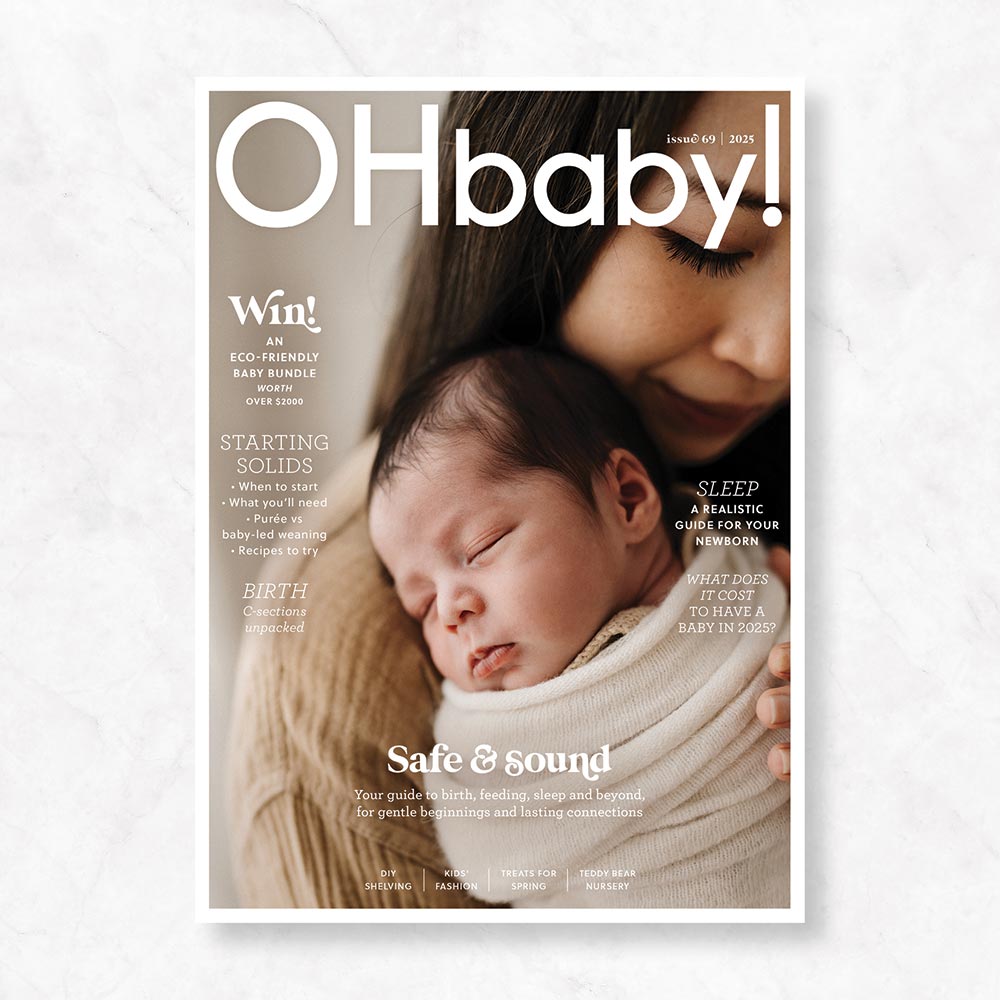
AS FEATURED IN ISSUE 69 OF OHbaby! MAGAZINE. CHECK OUT OTHER ARTICLES IN THIS ISSUE BELOW
Cookie Policy | Terms & Conditions | Privacy policy | Copyright © 2026 www.ohbaby.co.nz. All Rights reserved.